

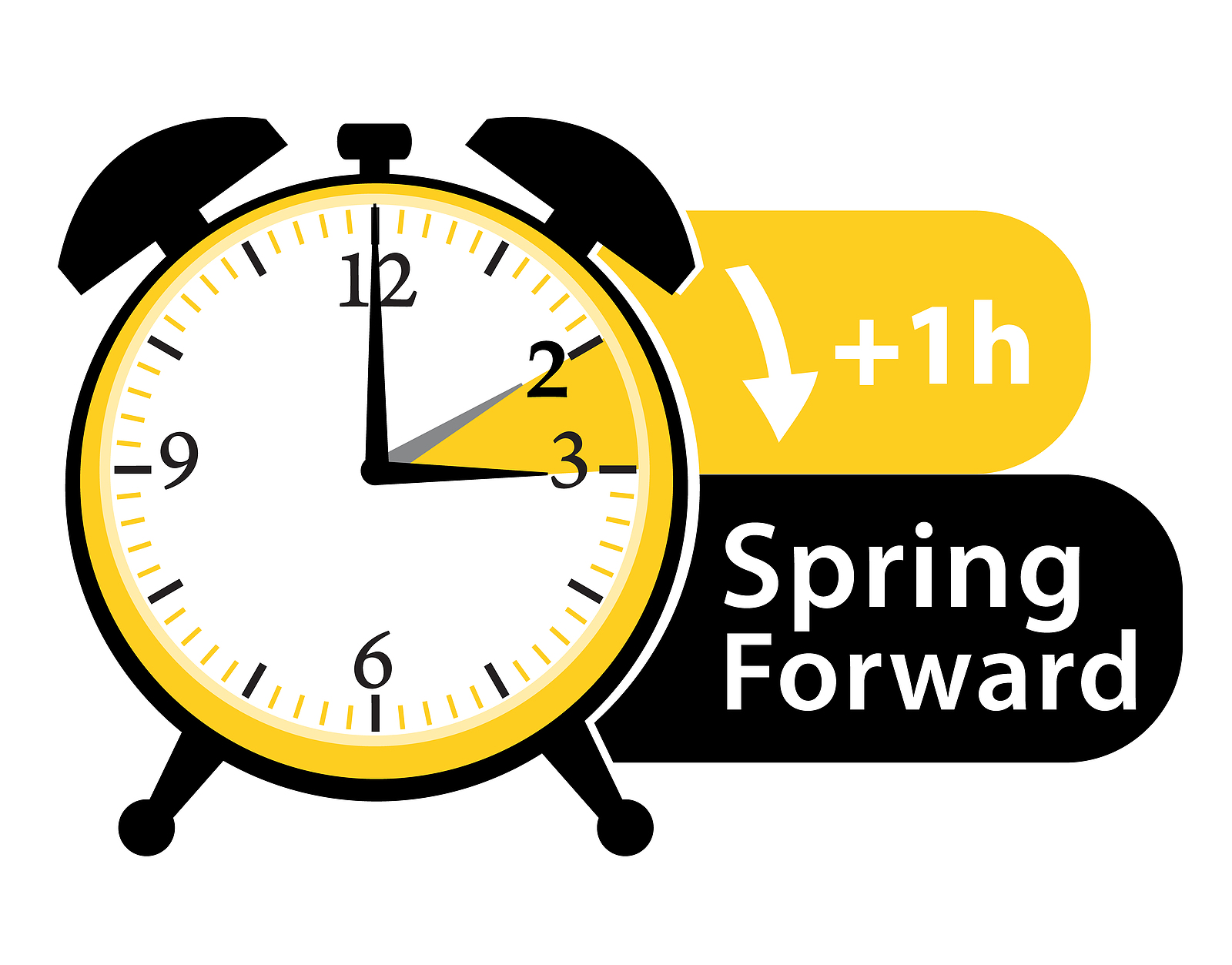
For residents of states who follow Daylight Saving Time, we set our clocks forward one hour at 2 a.m. on the second Sunday in March. This results in one less hour of sleep that night.
Daylight Saving Time is often referred to as “Spring Forward, Fall Back” because of when these time changes occur. The only U.S. states that don’t change their clocks twice a year are Hawaii and Arizona.
Daylight Saving Time Starts this Sunday, March 8
Here are a few timely tips (pun intended) to help get your spring off to a good start.
- Change the clocks before you go to bed Saturday night.
- Don’t forget your watches…including the ones you keep in the dresser drawer.
- Change the time on appliances and clocks that don’t automatically update, like the microwave and some alarm clocks.
- Remember to reset the clock on your car dashboard.
It’s a Good Time to Change Your Smoke Alarm Batteries
- Many smoke alarms use replaceable 9V or AA batteries. Check your user manual for details.
- Wired smoke alarms with replaceable batteries need battery changes too, in case of a power outage.
- Some smoke alarms have built-in non replaceable batteries designed to last ten years. But if the alarm makes “chirping” sounds, you need to replace the entire unit.
- Any smoke alarm ten years or older should be replaced. The year your smoke alarm was manufactured should be shown on the unit.
- Before you get on that ladder, be sure someone else is home in case of a mishap.
- After you replace the batteries use the test buttons to make sure the alarms are working.
- Consider helping friends and relatives change smoke alarm batteries, especially senior citizens.
- To learn more about home fire safety devices, click here.
See HabiLinks Web Guide for More Links You Can Really Use
The internet is full of great resources, but page after page of search results can be too much of a good thing! We search for useful information in eighteen lifestyle categories, so you don’t have to. When we find the link with the most useful content it becomes a HabiLink, one of the chosen few! Unlike other web guides, we don’t accept payment for listings. We simply think they’re the best at what they do. You’ll find more helpful info in the Emergency Preparedness category at HabiLinks. When you’re looking for help with emergency preparations, you can depend on HabiLinks for links you can really use.